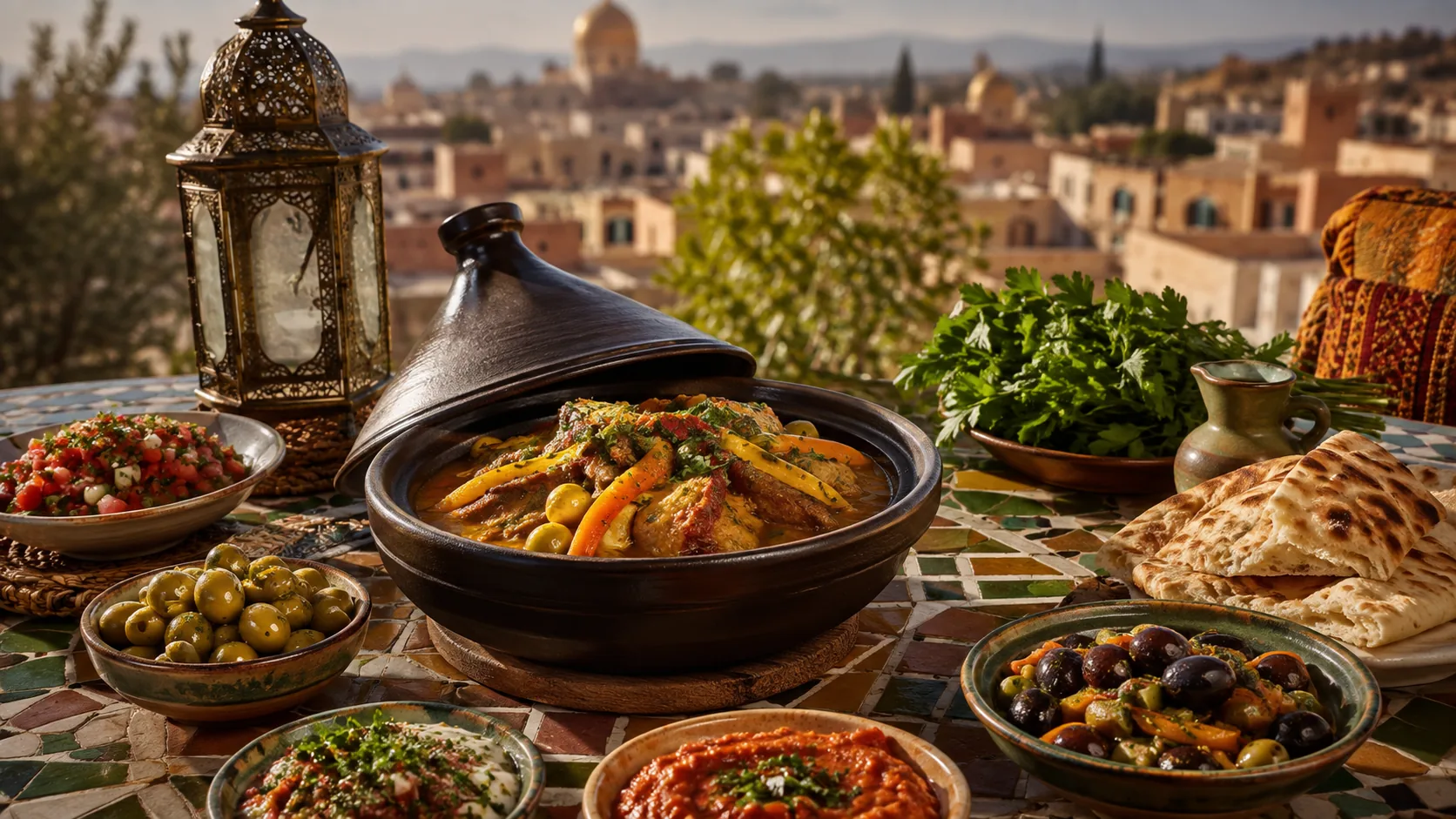
Saudi Food Guide: Regional Dishes Beyond Kabsa
Saudi cuisine changes by region, giving travelers much more to explore than a single national rice dish.
Why Travelers Should Know It
Central regions are known for jareesh and qursan, the west for saleeg and seafood influences, the south for unique breads and stews, and coastal areas for fish and rice.
For visitors, the value of this experience is not only the food itself. It also reveals how people in the Gulf share meals, use bread or rice, welcome guests, and build a table around conversation rather than speed.
What It Tastes Like
Expect wheat, rice, meat, dairy, dates, cardamom, and regional spice differences.
Flavor intensity varies by restaurant and household. Spiced does not always mean hot, and many dishes rely more on aroma, herbs, citrus, slow cooking, or texture than on chili.
What to Expect
- Kabsa and regional rice dishes
- Jareesh and qursan
- Saleeg
- Regional breads, seafood, and sweets
Where and When to Try It
Use Saudi heritage restaurants and ask which region each dish represents.
Choose a place with a focused menu, visible local customers, and food that is being prepared or served regularly. A shorter menu can be a positive sign when a restaurant specializes in one regional style.
How to Order with Confidence
Order two or three smaller regional dishes instead of one enormous platter when possible.
- Confirm the main ingredients and portion size.
- Ask what bread, rice, sauces, drinks, or side dishes are included.
- Request chili or very sweet additions separately when possible.
Build a Better Meal
A balanced Gulf meal often combines one rice or wheat dish with salad, yogurt, a light sauce, and Arabic coffee or tea afterward. Family-style portions are common, so confirm size before ordering.
A Common Traveler Mistake
A common mistake is eating only in the most visible tourist zone. Include one neighborhood café, bakery, or heritage restaurant for a broader picture.
Traveler Tip
Saudi portions are generous. Confirm serving size before ordering.
Save the dish name and restaurant location offline before leaving your hotel. This is especially useful in markets, old-city streets, and areas where mobile data or signage may be inconsistent.
Dietary and Allergy Notes
Gluten, dairy, nuts, and shared platters are common considerations.
Recipes and kitchen practices change from one venue to another. Travelers with serious allergies should carry a translated allergy card, keep medication accessible, and avoid any dish when the answer is unclear.