
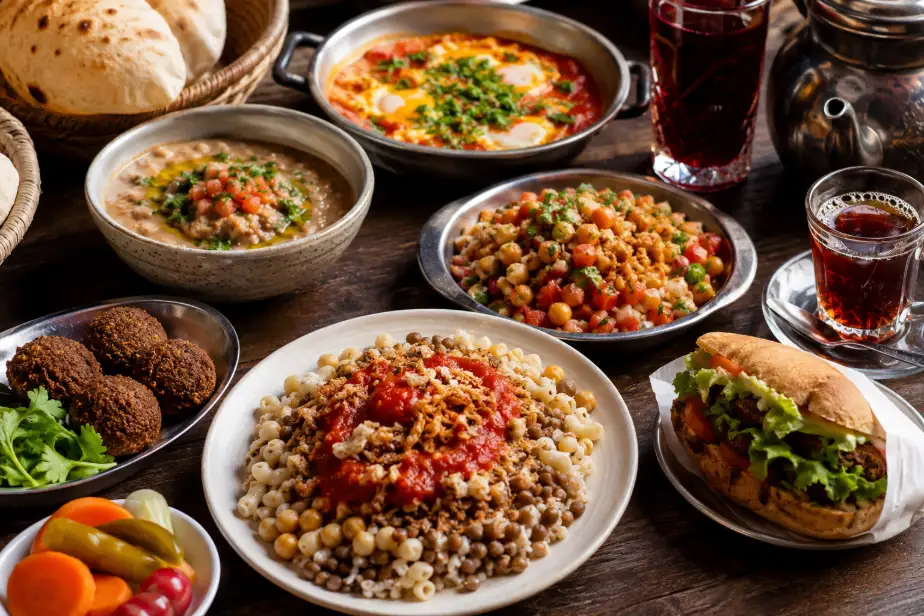
On your first day in Cairo, start with ful and taameya for breakfast, eat koshari for lunch, cool down with fresh sugarcane juice, and finish with hawawshi or Egyptian grills for dinner. If you still have room, order Om Ali or rice pudding for dessert.
That gives you a first taste of the food Cairenes actually know and love without trying to fit every famous Egyptian dish into one exhausting day.
Breakfast: Ful and Taameya
A Cairo breakfast should begin with ful, slow-cooked fava beans, and taameya, Egypt’s version of falafel made primarily from fava beans rather than chickpeas.
فول means ful, or cooked fava beans. Say it: Fool.
طعمية means taameya, Egyptian falafel. Say it: Ta-meh-ya.
Ful is soft, earthy and filling. Seasoning varies, but it may be served with oil, lemon, cumin or other additions. Taameya is fried until crisp outside while staying green, herbaceous and tender inside.
Eat both with aish baladi, Egypt’s round local flatbread. Tahini, pickles, tomatoes and eggplant may appear alongside them depending on the shop.
This is an excellent first meal because you can eat it at a simple neighborhood counter or sit down somewhere more comfortable. You do not need a formal breakfast restaurant to have a memorable one.
Current Cairo menus show basic ful and taameya items around EGP 30 to 50 per item at some casual venues, although portions, fillings and restaurant style can push the price higher. Delivery prices can also differ from what you see at the counter.
Lunch: Make It Koshari
If you eat only one unmistakably Egyptian dish on your first day, make it koshari.
A bowl combines rice, lentils, pasta and chickpeas, then adds tomato sauce and a generous layer of crisp fried onions. Garlic-vinegar sauce and hot chili sauce are commonly served alongside so you can adjust the flavor yourself.
The result is much better than the ingredient list sounds. You get soft lentils, chewy pasta, sharp tomato sauce and crunchy onions in the same mouthful.
Koshari is inexpensive, fast and filling, making it ideal for a sightseeing day. Current Cairo-area menus show straightforward portions at roughly EGP 20 to 55 per serving, depending on size and shop.
To order in Egyptian Arabic, say واحد كشري وسط لو سمحت, meaning “One medium koshari, please.” Say it: Wahed koshari wasat, law samaht.
If you do not want chili, say من غير شطة, meaning “Without chili.” Say it: Min gheir shatta.
Start cautiously with the chili sauce. You can always add more.
Afternoon Drink: Fresh Sugarcane Juice
After walking through Cairo, a cold glass of sugarcane juice can be exactly what you want.
Look for عصير قصب, meaning “sugarcane juice.” Say it: Aseer asab.
The cane is pressed through a machine and served as a pale, intensely sweet juice. It is usually drunk quickly rather than treated as a long café drink.
If sugarcane feels too sweet, lemon and mint drinks are another refreshing choice. Karkade, hibiscus tea, is also widely enjoyed and may be served hot or cold.
For a first day, try one traditional drink rather than automatically ordering a soft drink with every meal.
Dinner: Hawawshi for Something Crisp and Meaty
For dinner, try hawawshi if you want something casual and deeply satisfying.
Hawawshi is seasoned minced meat stuffed inside Egyptian bread and cooked until the bread becomes crisp and the meat juices soak into it. Recipes and spice blends vary by shop.
A classic version is usually straightforward and savory. Modern restaurants may offer cheese, sausage and other elaborate variations, but starting with a plain meat hawawshi gives you the clearest idea of the dish.
Current Cairo menus show how much venue choice matters. Basic hawawshi can be around EGP 70 to 100, while restaurant versions may reach roughly EGP 140 or more per serving.
If you would rather sit down for a longer dinner, choose Egyptian grilled meats such as kofta with bread, tahini and salads. Cairo’s broader restaurant prices vary considerably. Numbeo’s August 2026 data puts a meal at an inexpensive restaurant at about EGP 250 on average, with reported prices ranging from approximately EGP 100 to 500 per person.
Dessert: Om Ali or Rice Pudding
Finish with Om Ali, one of Egypt’s best-known warm desserts.
It is made by soaking pieces of pastry or bread-like pastry in sweetened milk and baking the mixture until rich and soft with browned edges. Nuts, raisins, coconut and other toppings may be added, but recipes vary by restaurant and family.
If you want something cooler and simpler, Egyptian rice pudding is an easy alternative.
People with nut allergies should ask about toppings rather than assuming a dessert is nut-free.
Street Food or Restaurant?
You do not have to choose one style for the whole day.
Small counters and casual shops are ideal for ful, taameya, koshari, juice and sandwiches. They are fast, inexpensive and useful when your day revolves around sightseeing.
A sit-down Egyptian restaurant gives you more space, table service and a broader menu, especially for grills, casseroles and shared dishes.
A good first day mixes both. Have breakfast or lunch somewhere simple, then slow down over dinner.
What About Tipping?
At a quick street-food counter, you generally do not need to turn every purchase into a tipping calculation.
At a sit-down restaurant, check the bill to see whether service has already been added. If it has not, around 10 percent is a commonly suggested guideline for restaurant service in Egypt.
Keeping small Egyptian-pound notes handy makes casual tipping much easier.
Your First-Day Cairo Food Plan
There is no need to chase a huge checklist. Cairo food is more enjoyable when you have time to notice the textures, watch how people order and learn the names of a few dishes.
Begin with ful and taameya. Make koshari your essential lunch. Drink fresh sugarcane juice in the afternoon. Then choose hawawshi or grills for dinner and finish with Om Ali if you have room.
Most importantly, say the name of at least one dish when you order. Even a simple “koshari” or “taameya” makes the meal feel less like pointing at a menu and more like participating in Cairo’s food culture.
Choose one dish, learn its name, and enjoy your first taste of the city.