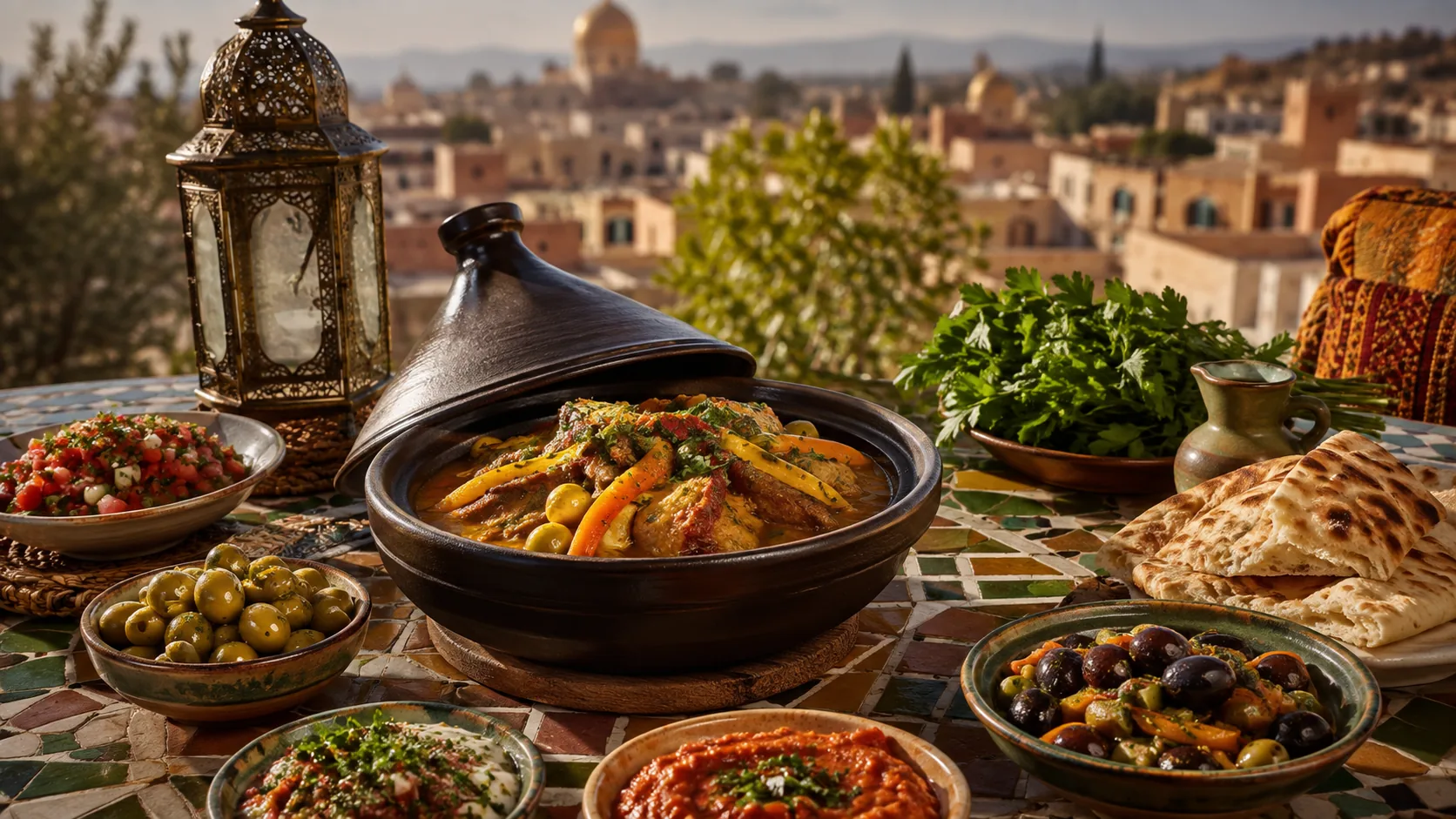
Food Prices in Morocco: How to Budget Without Guessing
Food costs in Morocco vary sharply between neighborhood cafés, medina tourist zones, riads, and luxury hotels.
Why Travelers Should Know It
Local bakeries, soup counters, and simple cafés are usually the best value. Traditional restaurants and rooftop venues charge more for setting and service. Seafood may be priced by weight.
For visitors, the value of this experience is not only the food itself. It also reveals how people in Morocco share meals, use bread or rice, welcome guests, and build a table around conversation rather than speed.
What It Tastes Like
The same dish can taste similar while costing much more in a famous square or hotel district.
Flavor intensity varies by restaurant and household. Spiced does not always mean hot, and many dishes rely more on aroma, herbs, citrus, slow cooking, or texture than on chili.
What to Expect
- Bakery breakfast and café snacks
- Casual lunch in a local restaurant
- Traditional dinner in a riad
- Seafood priced by portion or weight
Where and When to Try It
Compare a few menus, use places with visible prices, and keep one special-occasion meal in the budget rather than treating every dinner as premium dining.
Choose a place with a focused menu, visible local customers, and food that is being prepared or served regularly. A shorter menu can be a positive sign when a restaurant specializes in one regional style.
How to Order with Confidence
Ask for the menu and confirm whether taxes, service, bread, salads, or drinks are included.
- Confirm the main ingredients and portion size.
- Ask what bread, rice, sauces, drinks, or side dishes are included.
- Request chili or very sweet additions separately when possible.
Build a Better Meal
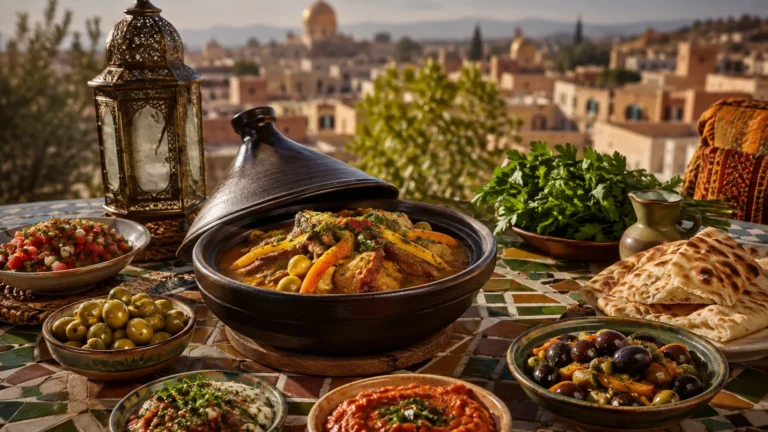
A balanced Moroccan meal often works best with bread, one or two cooked salads, the main dish, and mint tea afterward. Ordering several heavy mains at once can hide the individual flavors and create unnecessary waste.
A Common Traveler Mistake
A common mistake is comparing only menu prices. Service, drinks, bread, side dishes, location, and atmosphere can change the final bill.
Traveler Tip
Carry small local currency for cafés and markets, but use cards in established restaurants when accepted.
Save the dish name and restaurant location offline before leaving your hotel. This is especially useful in markets, old-city streets, and areas where mobile data or signage may be inconsistent.
Dietary and Allergy Notes
Budget guides do not replace allergy questions. Cheaper food can still be safe when turnover and hygiene are good.
Recipes and kitchen practices change from one venue to another. Travelers with serious allergies should carry a translated allergy card, keep medication accessible, and avoid any dish when the answer is unclear.